
Eat the Rainbow for your Gut Microbiome
You might have heard the expression "eat the rainbow" in online wellness spaces and there's actually real science behind why the colour of your food actually matters for your gut health.
Your Gut is Basically a Microscopic Zoo
Let's talk about what's actually going on in your digestive system. You have trillions of bacteria living in your gut right now and before you get grossed out, this is a good thing. Actually, it's a great thing. These bacteria help you digest food, produce vitamins, support your immune system, and even influence your mood and energy levels.
Here's a wild fact: you have more bacterial cells in your body than human cells. You're essentially more bacteria than human. But the key word here is diverse. The more variety of bacteria you have, the better your gut functions. And the best way to feed that diversity? You guessed it, it's colourful plants.
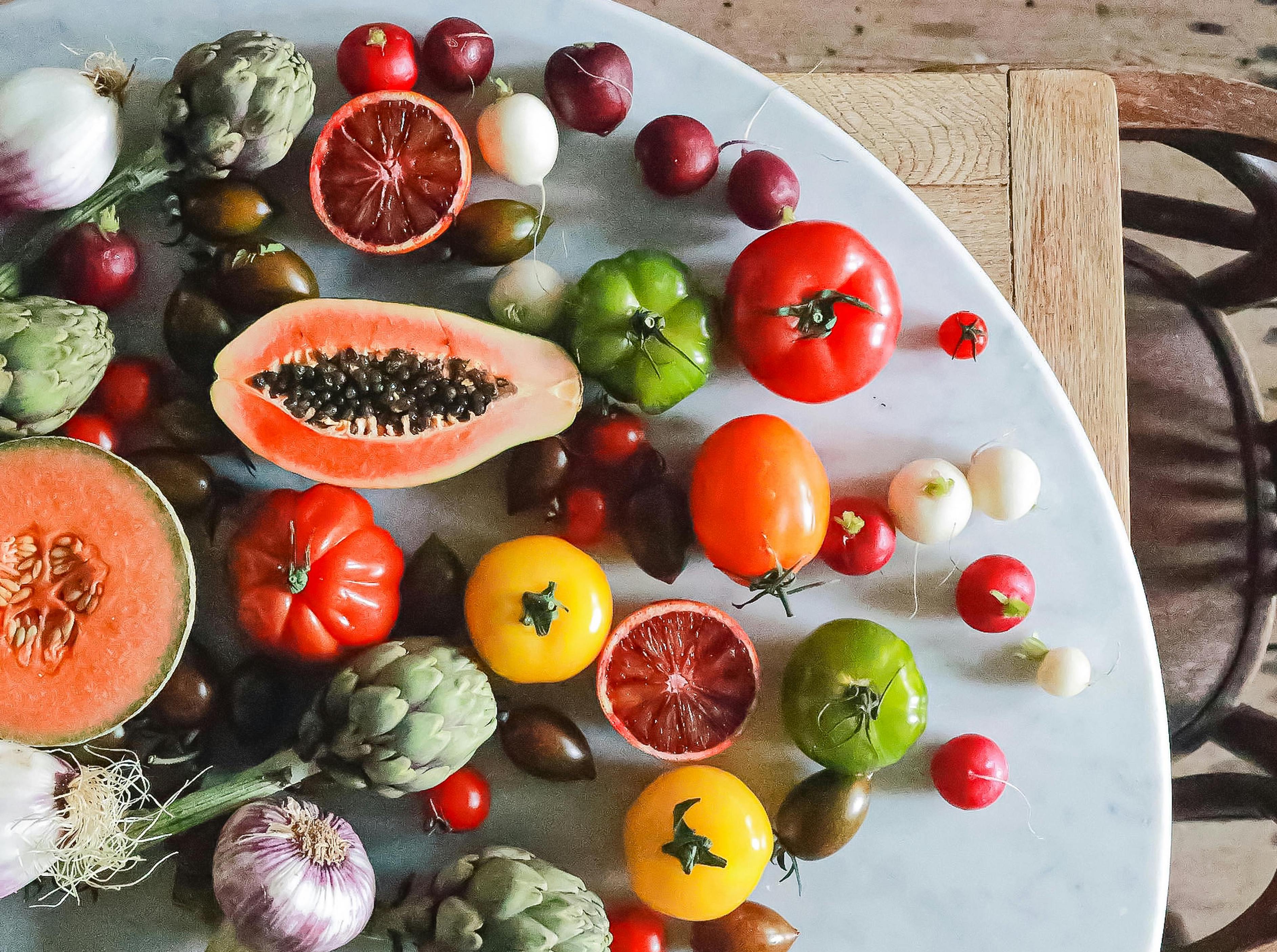
Why Colour Matters
Different coloured fruits and vegetables signal a different set of nutrients and plant compounds. When you eat red tomatoes, you're getting different beneficial compounds than when you eat purple cabbage or orange carrots. Your gut bacteria thrive on this variety.
Think of it like this: if you fed your gut bacteria the same beige food every day (like chicken and rice), you'd only support certain types of bacteria. But when you feed them red peppers one day, blueberries the next, and leafy greens after that, you're creating an environment where many different beneficial bacteria can flourish.
Red foods like tomatoes, strawberries, and red peppers bring lycopene and vitamin C, which are great for your heart and immune system. Orange and yellow foods like sweet potatoes, carrots, and mangoes are packed with beta-carotene, which your body converts to vitamin A. Greens like spinach, kale, and broccoli provide you with folate, calcium, and fiber. And those deep blue and purple foods, like blueberries, blackberries, and purple cabbage, contain anthocyanins that have antioxidant properties.
In Action
"Eating the rainbow" sounds simple until you're staring at your same boring grocery list. Here's what I tell clients: pick one new colourful fruit or vegetable each week. Just one. Maybe this week you try purple cabbage in your salad. Next week, you throw some frozen berries in your morning oats. The week after, you roast some beets.
Shopping seasonally helps too. Not only is seasonal produce cheaper and tastier, but it naturally forces variety into your diet. You're not going to eat the same things in January that you eat in July, and that's actually perfect for your gut.
The goal isn't perfection and you don't need to eat every colour every single day. But over the course of a week, try to hit as many colours as possible. Your gut bacteria will thank you, and you'll probably notice you feel better too.

I'm a Registered Associate Nutritionist (ANutr) specialising in eczema, gut health and food intolerances. Here you'll find honest, evidence-based nutrition advice, the stuff I wish someone had told me sooner.
Disclaimer: The content on this website is provided for informational purposes only and should not be construed as medical advice. It is not intended to replace professional consultation, diagnosis, or treatment. For personalised healthcare advice, always consult a qualified healthcare provider.


© 2026 Coherent Nutrition. All rights reserved.